Understanding What Makes a True Home Cinema Experience
In recent years, home entertainment has undergone a major transformation as streaming platforms, high-definition content, and smart devices have become part of everyday life. More users are now seeking cinema-level experiences without leaving their homes, which has significantly increased the demand for a high-quality projector for home theater. Unlike traditional televisions, projectors offer a more immersive viewing experience by expanding image size far beyond conventional screen limitations, allowing users to recreate a theater-like environment in almost any room.
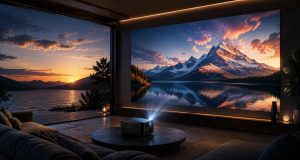
A modern projector for home theater is no longer just a simple display device. It has evolved into a complete entertainment solution that combines visual performance, smart connectivity, and flexible installation. When designing a home theater system, users must consider not only resolution and brightness but also how the projector interacts with room lighting, wall color, seating distance, and audio configuration. These environmental factors greatly influence the final viewing experience.
Another important aspect is adaptability. Many households do not have dedicated cinema rooms, which means the projector for home theater must perform well in multifunctional spaces such as living rooms or bedrooms. This requires a balance between brightness and contrast so that content remains clear even in partially lit environments.
Core Performance Factors That Matter Most
When evaluating a projector for home theater, resolution is often the first specification users notice. Full HD and 4K support have become increasingly common, allowing viewers to enjoy sharper details and more realistic visuals. However, resolution alone does not determine image quality. Brightness, measured in lumens, plays a crucial role in ensuring visibility under different lighting conditions.
Contrast ratio is equally important because it defines the difference between dark and bright areas in an image. A higher contrast ratio creates deeper blacks and more vibrant colors, which significantly enhances cinematic immersion. Color accuracy also contributes to realism, ensuring that skin tones, landscapes, and animated scenes appear natural and balanced.
Connectivity is another key factor in modern projectors. A versatile projector for home theater should support HDMI, wireless casting, USB playback, and compatibility with streaming devices. This ensures seamless integration with gaming consoles, laptops, and mobile devices.
Designing a Functional Home Theater Space
A well-designed environment can dramatically improve projector performance. Ideally, a projector for home theater should be used in a space where lighting can be controlled, allowing for deeper contrast and better color accuracy. However, modern projection technology has improved significantly, enabling good performance even in living rooms with moderate ambient light.
Screen choice also matters. While many users project directly onto walls, using a dedicated projection screen can enhance sharpness and brightness consistency. Seating distance should be adjusted based on screen size to maintain visual comfort and reduce eye strain during long viewing sessions.
Audio is another essential component of the home theater experience. Although many projectors include built-in speakers, external sound systems or soundbars are often used to create a more immersive environment. The combination of high-quality visuals and surround sound transforms a simple setup into a true cinematic experience.
The Future of Home Theater Projection
The evolution of the projector for home theater continues as manufacturers focus on improving portability, smart features, and energy efficiency. Future models are expected to integrate AI-based image optimization, automatic keystone correction, and enhanced wireless streaming capabilities.
As consumer expectations continue to rise, projectors will play an even more important role in home entertainment ecosystems. With their ability to deliver large-screen experiences in flexible environments, they remain one of the most effective solutions for creating personalized home cinemas.

 Azerbaijani
 Chinese